


Why Is a Metal Sheath Necessary?
Inside every tubular heater, the resistance wire itself cannot be directly exposed to the operating environment.
The outer sheath performs several functions simultaneously:
Protecting the Resistance Wire
The sheath isolates internal components from moisture, chemicals, and physical damage.
Transferring Heat Efficiently
Heat generated by the resistance coil must pass through the sheath surface before reaching the medium.
Maintaining Mechanical Strength
Industrial heaters are frequently exposed to vibration, pressure, thermal expansion, and repeated temperature cycles.
Supporting Electrical Safety
Combined with compacted magnesium oxide insulation, the metal sheath helps maintain electrical isolation throughout the heater's service life.
Without a suitable sheath material, heater reliability may be compromised regardless of power rating.

Different Sheath Materials Serve Different Purposes

No single material is suitable for every application.
Stainless Steel 304
Often used in water heating, air heating, and general industrial equipment.
Characteristics:
- Good corrosion resistance
- Cost-effective
- Suitable for moderate temperatures
Stainless Steel 316L
Preferred when higher corrosion resistance is required.
Common applications:
- Chemical processing
- Food equipment
- Marine environments
Incoloy
Designed for elevated temperature applications.
Advantages:
- Better oxidation resistance
- High-temperature stability
- Longer life under thermal cycling
Titanium
Used in aggressive chemical solutions.
Typical applications:
- Electroplating systems
- Acid tanks
- Surface treatment equipment
Heat Transfer Depends on More Than Power
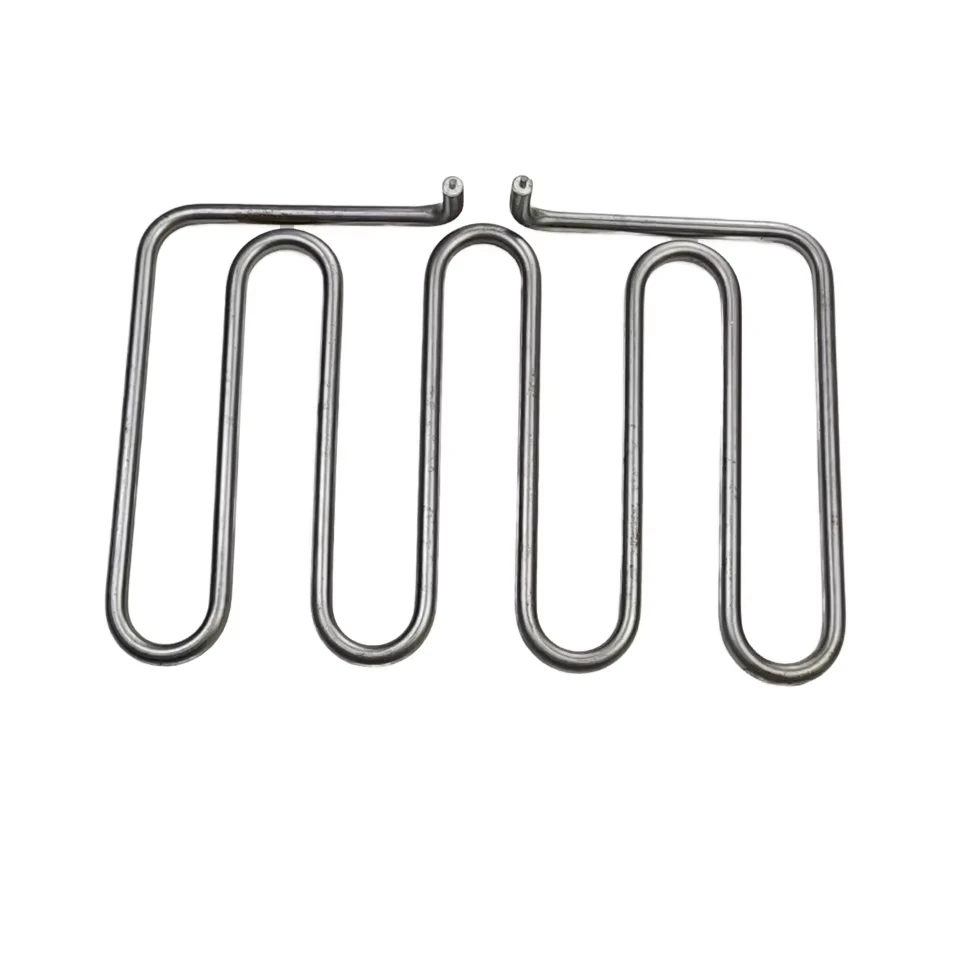
Many users focus primarily on wattage, but thermal performance depends on several additional factors.
Sheath Surface Area
Larger heating surfaces help distribute heat more evenly.
Sheath Material Conductivity
Different metals transfer heat at different rates.
Operating Medium
Air, water, oil, and solids absorb heat differently.
Surface Loading
Excessive watt density may shorten heater life even when total power is correct.
For this reason, heater design often involves balancing temperature, surface load, and material characteristics.
Where Mechanical Failures Usually Occur

From manufacturing experience, heater failures are not always electrical.
Several problems are frequently related to mechanical conditions.
Excessive Bending
Improper installation may deform the tube and damage internal insulation.
Vibration Fatigue
Continuous vibration can gradually weaken connections and terminals.
Thermal Expansion Stress
Repeated heating and cooling cycles may cause stress concentration.
Corrosion Penetration
Improper sheath materials can lead to surface degradation and eventual leakage.
Understanding these factors helps improve service life and reduce unexpected downtime.
Why Material Selection Is Sometimes More Important Than Heater Design
Two heaters with identical dimensions and power ratings may perform very differently simply because of the sheath material.
For example:
A heater operating in clean water may function reliably with SS304.
The same heater used in chloride-containing solutions may require SS316L.
High-temperature applications often demand Incoloy rather than standard stainless steel.
In corrosive environments, titanium may significantly extend service life.
In many industrial projects, material selection determines reliability more than electrical specifications.

Typical Equipment Using Metal Sheathed Heaters

Metal Sheathed Heaters are commonly integrated into:
Injection Molding Equipment
Providing process heat for molds and machinery.
Water Heating Systems
Maintaining liquid temperatures in tanks and vessels.
Packaging Equipment
Supporting temperature control during production.
Air Heating Systems
Supplying heat for ovens and drying equipment.
Chemical Processing Equipment
Heating corrosive or temperature-sensitive media.
Food Processing Machinery
Maintaining stable operating temperatures.
Because of their versatility, Metal Sheathed Heaters are found in numerous industrial sectors.
Lessons Learned From Custom Manufacturing Projects

Through years of production experience, several observations repeatedly emerge.
Higher Temperature Does Not Always Mean Better Productivity
Operating above required temperatures may accelerate oxidation and shorten heater life.
Material Upgrades Often Reduce Long-Term Costs
Selecting a more suitable sheath material may reduce maintenance frequency.
Mechanical Protection Is Frequently Overlooked
Improper installation and excessive vibration can lead to premature failures.
Stable Operating Conditions Extend Service Life
Frequent temperature cycling tends to increase thermal stress on internal components.
Many reliability issues originate from application conditions rather than manufacturing defects.
Manufacturing Process and Inspection
Each Metal Sheathed Heater undergoes controlled manufacturing procedures including:
- Tube preparation and inspection
- Resistance wire assembly
- Magnesium oxide filling
- Swaging and compaction
- Bending and forming
- Terminal assembly
- Electrical resistance testing
- Insulation resistance testing
- Leakage current inspection
- Final quality verification

Quality Assurance

To ensure product consistency, every batch undergoes multiple inspections.
Quality controls include:
- Incoming material inspection
- Electrical performance testing
- Insulation verification
- Leakage current testing
- Power output confirmation
- Final performance inspection
Manufacturing is conducted under an ISO9001 certified quality management system.
Certifications
- CQC Certified
- ISO9001 Certified
Warranty
- 1-Year Warranty
MOQ
- 50 Pieces
Lead Time
Most custom orders can be completed within 25 days depending on design requirements and quantity.
Need Help Choosing the Right Sheath Material?
Selecting a Metal Sheathed Heater involves more than voltage and power.
If you can provide:
- Operating medium
- Working temperature
- Installation environment
- Available space
- Voltage requirements
- Quantity requirements
Our engineering team can recommend suitable sheath materials and configurations based on actual operating conditions to help improve reliability and service life.
Certifications
Deliver complete, certified solutions


FAQ
Q: Why do oil heaters often require lower watt density?
A:Oil generally transfers heat more slowly than water. Lower watt density helps reduce localized overheating and carbon formation.
Q:Can the same heater be used for both oil and water?
A:In some cases yes, but the optimal design often differs depending on the liquid properties and operating conditions.
Q: What information is required for heater selection?
A:Liquid type, temperature range, tank size, voltage, installation method, and operating environment are typically required.
Q: Which material should I choose?
A:SUS304 and SUS316L are suitable for many industrial applications, while titanium and Incoloy are often used for more demanding environments.
Q: Do you provide OEM and custom manufacturing?
A:Yes. OEM and ODM services are available for industrial customers worldwide.
Request a Quote
Looking for an Oil and Water Heater designed for your specific application?
Share your liquid type, operating temperature, tank size, voltage, and installation requirements. Our engineering team will review the application and recommend a suitable heating solution.
Need a Custom Heating Solution?
Contact our engineering team for:
Product recommendations
OEM customization
Technical consultation
Fast quotation support
Get Free Quote
Contact Us
Send Inquiry
Hot Tags: metal sheathed heaters, China metal sheathed heaters manufacturers, suppliers, factory